

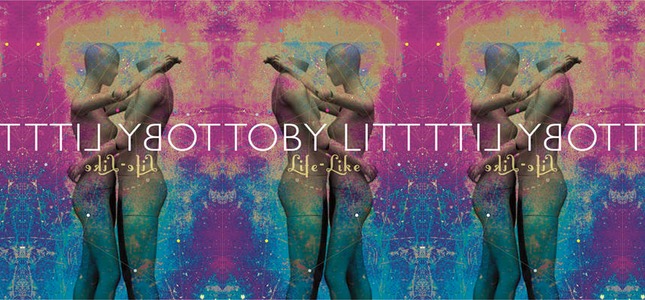
 The rigidly alphabetic flow of Toby Litt’s back catelogue has led us all the way to the letter L this year, following eighteen years dedicated to the concept, and the title in question is Life-Like, returning the British writer to his short story roots. With a world view distribution of stories, it looks set to be a wide ranging book, but with an overarching theme centring on our globalizing and atomizing world, it should have a strong current running throughout them formed within the opposing forces.
Life-Like will be released on hardback on the 15th October 2014 and if you’ve got a good grip on your alphabet and simple mathematics you’ll know that this is 12th book in the alphabetic release cycle. That leaves 14 books still left to write, and at the age of 46 and currently averaging 1.2 books every 2 years we should see the Z-based zenith of the series come to a close in just under 17 years from a 63 year old Toby Litt. If he manages to pull it off, we’ll be very impressed, but right now it’s all about Life-Like.
The short stories are framed within a context of emotionally heightened situations, whether they’re set in England, Sweden, India, Iran and Australia, to show the ever shrinking and interconnected nature of the world, but also the evident profusion of different stand-points. The first of the stories in the collection sees Litt returning to Paddy and Agatha, two characters that featured in 2004’s Ghost Story. Following the stillbirth of their second child, their marriage has started to softly break apart and the couple find a port in the gentle storm with someone else, but like a chain reaction where one event creates an interconnected new event each of the four find and embrace a different new person, which doubles and redoubles into infinity.
Just as our global reach is pretty much all encompassing, we can’t get away from from the inherent fragmentation of existence and Life-Like looks set to reiterate and explore these realities from a number of different angles.
Toby started giving his titles names that follow the alphabet in 1996 with Adventure In Capitalism, and since then we’ve seen everything from Beatniks, Corpsing and Exhibitionism to Ghost Stories, Hospital and King Death. It’s a fairly novel way to structure your writing career, and one that stands in stark contract to Toby innate lack of formula when it comes to the progression of any of his stories as he works each from a unique perspective.
Short story collections have contributed to some of the greatest books in literary history, with our favourite being James Joyce’s Dubliners, so it’s good to see the format continuing to be an influential element for writers like Litt. It’s also good to see form innovation so high up on a writer’s agenda.