

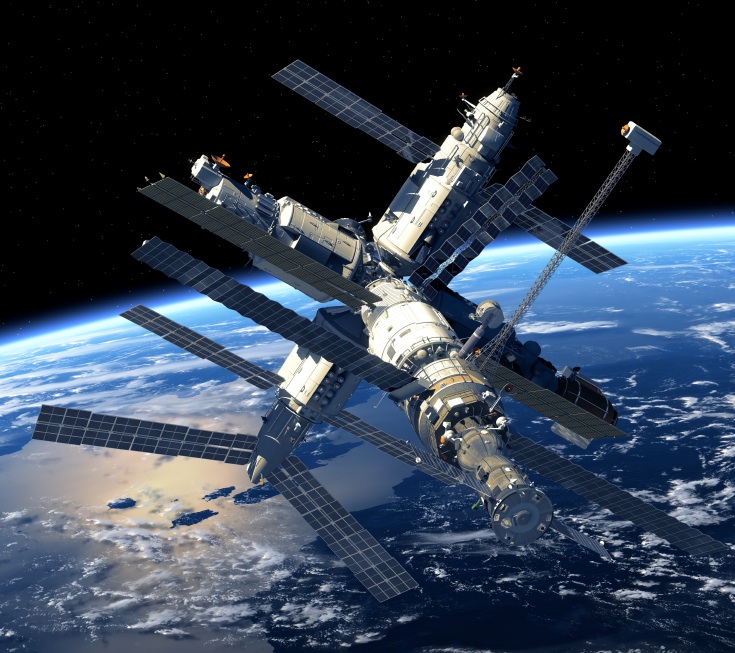
 Russian scientists, engineers and pilots have been involved in our initial forays into space exploration right from the very beginning of the space race, which is one of the big reasons why Russia’s Space Quest exhibition at the Science Museum is going to be so interesting. With Channel 4’s Live from Space Season this month, the interest in astronomy and space travel is on the up and if you combine this with the new space tourism race you’ve got the makings of what’s on the horizon, so the exhibition will be a great opportunity to look back on the contribution of one if the world’s most important players, before we all start living on the moon.
Opening in Autumn 2014, it will be the biggest and most significant display of Russian space artefacts outside of the Federation. However, it won’t just centre on the launch of Sputnik, the world’s first satellite, in 1957 or their flight to make Yuri Gagarin the first man in space in 1961, as it will go back much further than that, uncovering the evolving social, scientific and political landscape that contributed top the eventual breakthroughs in Russia.
Rather randomly, 2014 happens to be the UK-Russia Year of Culture and the exhibition is planned as the main event from the series of events designed to share each other’s cultural heritage, both in the UK and Russia. With the 2014 Sochi Winter Lympics taking place it seemed like pretty good timing, although the situation in Ukraine doesn’t exactly do the programme many favours.
However, what it does do is reiterate the importance of social interaction and cultural sharing to ensure that politics don’t divide borders too strongly. Russia has given us everything from great literature to captivating theatre and dance over the years, as well as their contribution to the space age, so it’s more important than ever to build bridges when politically our countries feel so divergent.
The exhibition, which has been given the working title of Russia’s Space Quest, will feature a wide range of Russian space artefacts including spacecraft that has been flown as a part of their space programme, rocket engines, space suits and life support systems to give us a first hand view of Russian space exploration. However, as well as the more impressive, big ticket items, there will also be items that remind us that it’s all a product of the people that worked to make it all happen, including memorabilia from the scientist, engineers and cosmonauts that contributed to Russian space exploration.
If you’re wondering what the difference between a cosmonaut and an astronaut is, it’s actually nothing but terminology. Essentially, cosmonaut is just the English derivative of the Russian term for astronaut (kosmonavt). If you’re also wondering what fuel rockets use to blast into space, it’s liquid hydrogen and oxygen. If you’ve got a whole host of similar questions then you should probably plan a trip to see the Science Museum’s Russian Space Quest exhibition.